How to Invest in Corporate Bonds in India | Beginner's Guide



As more investors look beyond traditional savings products, corporate bonds in India are emerging as a popular choice for generating fixed income and diversifying investment portfolios. With increasing digital access and growing awareness around fixed income investments India, retail participation in the bond market has significantly increased in recent years.
For investors wondering how to invest in corporate bonds, understanding the basics is essential before getting started. Corporate bonds are debt instruments issued by companies to raise capital, offering investors periodic interest payments over a fixed tenure. Depending on the issuer, credit rating, and market conditions, these investments may offer different risk and return profiles.
Today, investors can access corporate bond investment India opportunities more conveniently through SEBI-regulated online platforms. From AAA rated bonds India for conservative investors to selective high yield bonds India options for higher return potential, the market offers a range of choices based on individual financial goals and risk appetite.
This beginner guide corporate bonds article explains how corporate bonds work, their risks, returns, and how beginners can invest in bonds India 2026 with greater confidence and clarity.
What Are Corporate Bonds in India?
Corporate bonds are debt instruments issued by companies to raise capital from investors. Instead of borrowing money from banks alone, businesses issue bonds to individuals and institutional investors in exchange for regular interest payments over a fixed period. In simple terms, when you invest in a corporate bond, you are lending money to the issuing company for a specified tenure.
In return, the company agrees to pay you interest — commonly known as the coupon payment — at predetermined intervals, along with the repayment of the principal amount on maturity.
As corporate bond investment India continues to grow, bonds are increasingly becoming an important part of diversified investment portfolios, especially for investors looking for relatively stable fixed income opportunities beyond traditional deposits.
Unlike equities, where returns depend heavily on market performance, corporate bonds typically offer predefined interest payouts, making them attractive for investors seeking income visibility and lower volatility. However, returns and risk levels may vary depending on the issuer’s financial strength, credit rating, and market conditions.
For example:
This predictable structure is one of the reasons why many investors exploring safe investment options in India consider bonds as part of their fixed income allocation strategy.
Key Features of Corporate Bonds
1. Coupon Rate
The coupon rate refers to the annual interest paid by the issuer on the bond’s face value. Some bonds pay interest monthly, quarterly, annually, or at maturity.
2. Maturity Period
Corporate bonds come with fixed tenures ranging from a few months to several years. Investors can choose bonds based on their liquidity needs and investment horizon.
3. Credit Rating
Credit rating agencies evaluate the issuer’s ability to repay debt obligations. Higher-rated bonds, such as AAA rated bonds India, are generally considered relatively lower risk compared to lower-rated or high yield bonds India.
4. Tradability
Many listed corporate bonds can be bought and sold on exchanges before maturity, offering liquidity to investors depending on market demand.
For beginners learning how to invest in corporate bonds for beginners in India, listed bonds are often considered more accessible due to greater transparency and easier participation through online bond investment platform India options.
Why Investors Are Choosing Corporate Bonds in 2026
Corporate bonds India are witnessing growing interest in 2026 as investors look beyond traditional savings products for more diversified fixed income opportunities. With increasing access to digital investing and greater awareness around fixed income investments India, corporate bonds are gradually becoming a preferred asset class for retail investors.
One of the key reasons investors are choosing corporate bonds is the potential for higher yields compared to traditional fixed deposits. While returns vary depending on issuer quality and market conditions, many investors evaluating bond returns vs FD India are exploring bonds for potentially better risk-adjusted income opportunities.
Another major advantage is predictable income generation. Since most bonds offer predefined interest payouts at regular intervals, they may appeal to investors looking for visibility in cash flows and relatively lower volatility compared to equities.
Corporate bonds also help diversify investment portfolios. By adding fixed income exposure alongside equities and traditional savings products, investors can spread risk across different asset classes.
The rise of SEBI-regulated online bond investment platform India solutions has further improved retail participation in the bond market. Investors can now compare yields, credit ratings, maturities, and issuer profiles more conveniently than before, making it easier to invest in bonds India 2026 through digital platforms.
At the same time, ongoing market development initiatives and increasing awareness around debt market participation are contributing to the growth of India’s corporate bond ecosystem. As a result, more first-time investors are exploring corporate bond investment India as part of their long-term financial planning strategy.
Types of Corporate Bonds in India
Understanding the different types of corporate bonds India offers is important before making an investment decision. Each bond category comes with its own risk-return profile, liquidity level, and suitability based on investor goals.
AAA Rated Bonds
AAA rated bonds India are issued by companies with strong financial credibility and a relatively lower risk of default. These bonds are generally preferred by conservative investors looking for more stable fixed income investments India opportunities.
While AAA-rated bonds may offer comparatively lower yields than riskier debt instruments, they are often considered suitable for beginners exploring how to invest in corporate bonds for the first time.
High Yield Bonds
High yield bonds India are issued by companies offering relatively higher interest rates to attract investors. These bonds may provide higher return potential, but they also carry higher credit risk compared to top-rated issuers.
Investors considering high yield bonds should carefully evaluate the issuer’s financial health, repayment history, and overall risk profile before investing.
Secured vs Unsecured Bonds
Secured bonds are backed by specific company assets, which may provide an added layer of protection in case of repayment issues. Unsecured bonds, on the other hand, are not backed by collateral and rely primarily on the issuer’s creditworthiness.
For investors evaluating whether corporate bonds are safe in India, understanding this distinction is important while assessing risk.
Listed vs Unlisted Bonds
Listed bonds are traded on stock exchanges and generally offer better transparency and accessibility for retail investors. Unlisted bonds are privately placed instruments that may have lower liquidity and limited public disclosures.
Many beginners prefer listed bonds due to easier access through a bond investment platform India investors can use digitally.
Taxable vs Tax-Free Bonds
Most corporate bonds are taxable, meaning the interest earned is added to the investor’s taxable income. Certain government-backed or specified bonds may offer tax benefits depending on prevailing regulations.
How Do Corporate Bonds Work?
Before learning how to invest in corporate bonds, it’s important to understand how these instruments actually function. In simple terms, corporate bonds allow companies to borrow money from investors for a fixed period in exchange for regular interest payments.
When investors buy corporate bonds India issuers offer, they invest a specific amount known as the face value or principal. The issuing company then pays interest on this amount at a fixed or variable rate over the bond’s tenure. Once the bond reaches maturity, the principal amount is repaid to the investor, subject to issuer repayment capability.
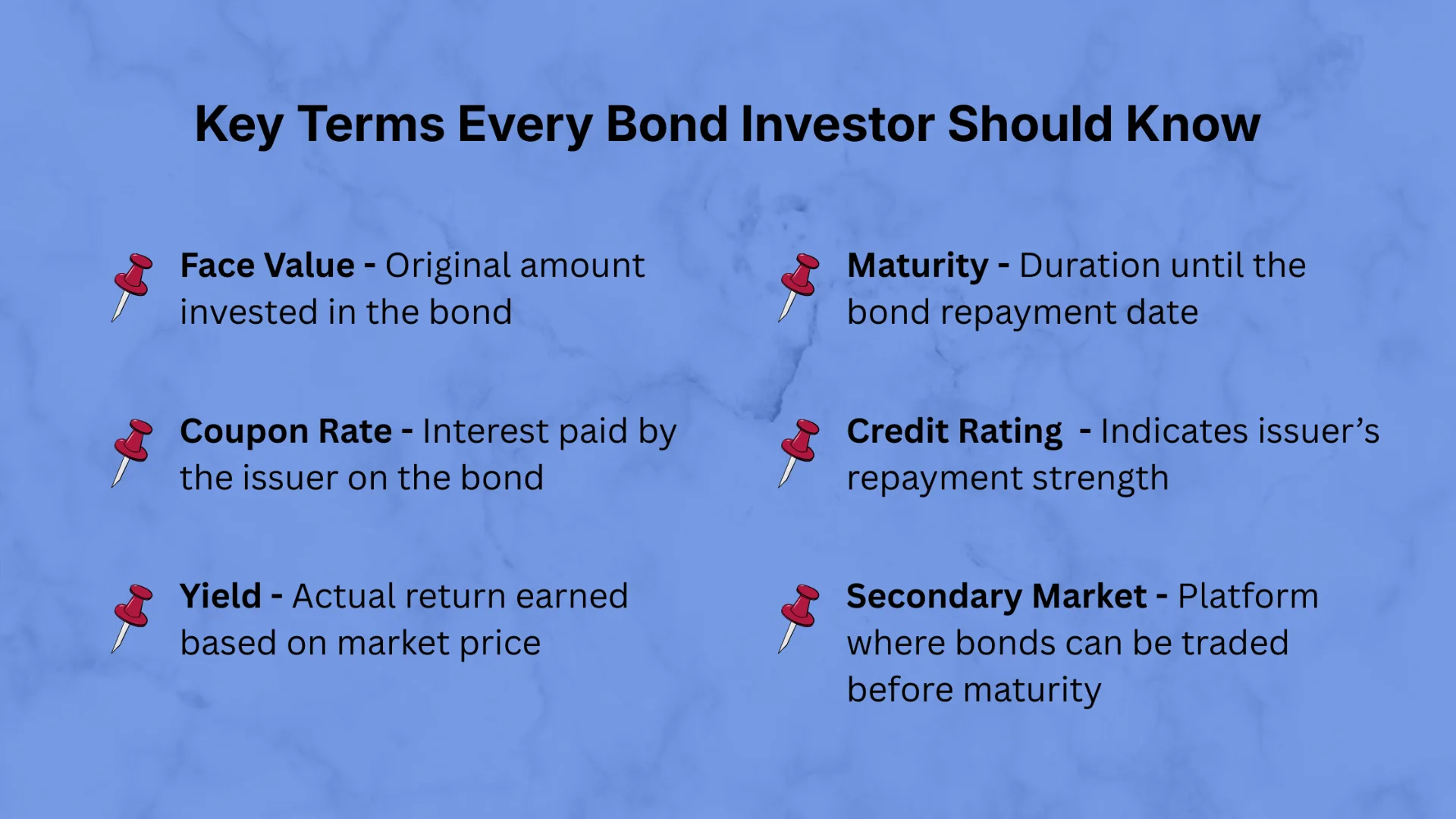
Several factors influence the overall return and risk profile of a corporate bond investment India investors choose.
What Is Coupon Rate in Bonds?
The coupon rate is the annual interest rate a company pays to bondholders based on the bond’s face value. For example, a bond with a face value of ₹1 lakh and a 9% coupon rate pays ₹9,000 annually as interest.
Coupon payouts may be monthly, quarterly, annually, or cumulative, depending on the bond structure.
Understanding Yield in Corporate Bonds
While coupon rate refers to fixed interest, yield reflects the actual return an investor may earn depending on the bond’s market price. If bonds are purchased at a discount or premium in the secondary market, the effective yield may differ from the coupon rate.
This is one reason why investors comparing bond returns vs FD India often evaluate both coupon and yield before investing.
Why Credit Ratings Matter
Credit ratings help investors assess the issuer’s financial reliability and repayment capacity. Bonds with higher ratings, such as AAA rated bonds India, are generally considered relatively lower risk compared to lower-rated or high yield bonds India.
For beginners exploring safe investment options India, checking credit ratings is an important step before investing.
Can Corporate Bonds Be Sold Before Maturity?
Yes. Many listed corporate bonds can be traded in the secondary market before maturity, depending on liquidity and market demand. This gives investors flexibility if they wish to exit their investment earlier instead of holding the bond until maturity.
Are Corporate Bonds Safe in India?
One of the most common questions among new investors is — are corporate bonds safe in India? The answer depends on the quality of the issuer, the bond structure, and the investor’s risk appetite.
Corporate bonds are generally considered a fixed income investment option, but like any market-linked instrument, they carry certain risks. The level of safety varies from one bond to another. Bonds issued by financially strong companies with higher credit ratings are typically considered relatively lower risk compared to lower-rated issuers offering higher yields.
This is why understanding credit ratings is extremely important before making any corporate bond investment India decision.
Why Credit Ratings Matter
Credit rating agencies assess a company’s repayment capability and financial stability. Higher-rated instruments, such as AAA rated bonds India, are generally viewed as more stable because they indicate stronger creditworthiness.
On the other hand, high yield bonds India may offer higher interest rates, but they also carry comparatively higher credit risk. In most cases, higher potential returns come with higher levels of risk.
Key Risks Investors Should Know
| Risk Type | Explanation |
|---|---|
| Credit Risk | Possibility of issuer default or delayed repayment |
| Interest Rate Risk | Bond prices may fluctuate when interest rates change |
| Liquidity Risk | Difficulty in selling bonds quickly in the secondary market |
How Investors Can Reduce Risk
For investors exploring how to invest in corporate bonds for beginners in India, diversification plays an important role in managing risk. Instead of investing in a single issuer or sector, spreading investments across different bonds may help reduce concentration risk.
Investors may also prefer:
- Exchange-listed bonds for better transparency
- Higher-rated issuers for relatively lower risk exposure
- SEBI-regulated bond investment platform India options for easier access and information disclosure
Is Bond Investment Safe for Beginners?
Corporate bonds can be suitable for beginners when selected carefully and aligned with individual financial goals. However, investors should avoid choosing bonds based only on high coupon rates. Evaluating credit quality, issuer background, liquidity, and investment horizon is equally important.
For first-time investors, starting with well-rated and exchange-listed corporate bonds may offer a more balanced approach to fixed income investing in India.
Step-by-Step Guide to Invest in Corporate Bonds in India
If you are wondering how to invest in corporate bonds, having a structured approach can help you make more informed investment decisions. Here’s a step by step bond investment guide India investors can follow in 2026.
Step 1: Define Your Investment Goal
Start by identifying why you want to invest in corporate bonds India. Your investment objective could be regular income generation, portfolio diversification, capital preservation, or balancing equity exposure with fixed income investments India.
Your financial goal will help determine the type of bonds, tenure, and risk level suitable for your portfolio.
Step 2: Choose Your Risk Profile
Not all corporate bonds carry the same level of risk. Conservative investors may prefer AAA rated bonds India with relatively stable return potential, while moderate-risk investors may explore selective high yield bonds India for potentially higher income opportunities.
Understanding your risk appetite is an important part of how to invest in corporate bonds for beginners in India.
Step 3: Compare Bond Ratings
Before investing, review the issuer’s credit rating, financial strength, repayment history, and sector outlook. Credit ratings provide insight into the issuer’s ability to meet debt obligations.
Higher-rated bonds generally offer lower risk exposure, while lower-rated bonds may offer higher yields with increased risk.
Step 4: Open Demat & Trading Account
To invest in listed corporate bonds, investors typically need an active demat and trading account. These accounts help hold bonds electronically and enable transactions through regulated exchanges and platforms.
Step 5: Select a SEBI-Registered Bond Platform
Choosing a reliable bond investment platform India investors can access digitally is important for transparency and convenience. Investors should look for platforms offering issuer information, bond comparisons, credit ratings, yield details, and easy investment access.
Platforms like Equirize allow investors to explore listed bond opportunities, compare fixed income products, and access corporate bond investment India options digitally.
Step 6: Evaluate Yield, Tenure & Liquidity
Instead of focusing only on interest rates, investors should evaluate:
- Yield to maturity (YTM)
- Bond tenure
- Credit quality
- Interest payout frequency
- Liquidity in the secondary market
A balanced evaluation helps investors align bond investments with their financial goals and cash flow requirements.
Step 7: Invest and Track Your Portfolio
Once you select suitable bonds, monitor your portfolio periodically for rating changes, interest payouts, maturity timelines, and market developments. Tracking investments regularly is important for managing risk and making informed reinvestment decisions over time.
For investors looking to explore how to invest in corporate bonds in a more accessible way, digital platforms are making bond investing simpler and more transparent than ever before.
What Beginners Should Look for in Corporate Bonds
When exploring the best corporate bonds to invest in India 2026, investors should focus less on chasing the highest yields and more on evaluating overall credit quality, issuer strength, and investment suitability.
For beginners entering the corporate bonds India market, well-rated and listed securities may offer a relatively balanced approach between risk and return.
AAA-Rated Issuers
AAA rated bonds India are generally issued by financially strong companies with a relatively lower perceived default risk. These bonds are often preferred by conservative investors looking for stable fixed income opportunities.
PSU-Backed Entities
Bonds issued by public sector undertakings (PSUs) are commonly considered by investors seeking relatively stable and established issuers within the debt market.
Strong Financial Fundamentals
Before investing, evaluate factors such as the issuer’s balance sheet strength, debt levels, profitability, and repayment track record.
Regular Interest Payment History
Companies with a consistent payment history may provide greater confidence regarding income visibility and repayment discipline.
Listed Securities
Listed bonds generally offer better transparency, disclosure standards, and accessibility through a bond investment platform India investors can access digitally.
Popular Corporate Bond Categories in India
Some commonly explored categories include:
- PSU bonds
- NBFC bonds
- Infrastructure bonds
- Financial institution bonds
However, investors should always assess individual bond risks, credit ratings, and investment objectives instead of selecting bonds purely based on sector or coupon rate.
For investors learning how to invest in corporate bonds for beginners in India, focusing on diversification and credit quality may help build a more balanced fixed income portfolio.
Common Mistakes Beginners Should Avoid
As interest in corporate bond investment India continues to grow, many first-time investors enter the market without fully understanding the risks involved. Avoiding a few common mistakes can help investors make more informed and balanced decisions.
Chasing High Yields Without Assessing Risk
Higher returns often come with higher credit risk. Many high yield bonds India may offer attractive interest rates, but investors should evaluate the issuer’s financial strength before investing.
Ignoring Credit Ratings
Credit ratings play an important role in assessing repayment capability. For beginners learning how to invest in corporate bonds for beginners in India, checking issuer ratings is a critical step before investing.
Investing in a Single Issuer
Putting all investments into one company may increase concentration risk. Diversifying across issuers, sectors, and maturities may help reduce overall portfolio risk.
Overlooking Liquidity
Not all bonds are actively traded in the secondary market. Investors should evaluate liquidity before investing, especially if they may need access to funds before maturity.
Ignoring Tax Implications
Focusing only on coupon rates without considering taxation can impact actual returns. Investors should evaluate post-tax returns while comparing bond returns vs FD India and other fixed income investments India options.
A disciplined and research-driven approach can help investors navigate the corporate bonds India market more effectively while aligning investments with their financial goals and risk profile.
Who Should Invest in Corporate Bonds?
Corporate bonds India can be suitable for investors looking to add fixed income stability and portfolio diversification to their investment strategy. Depending on risk appetite and financial goals, corporate bond investment India may appeal to different types of investors.
Conservative Investors
Investors seeking relatively stable fixed income investments India options may consider higher-rated corporate bonds as part of a balanced portfolio strategy.
Retirees Seeking Regular Income
Corporate bonds offering periodic interest payouts may suit retirees looking for predictable cash flows and lower volatility compared to purely equity-based investments.
Fixed Deposit Investors Exploring Alternatives
Many traditional FD investors are now comparing bond returns vs FD India to explore diversified income-generating opportunities beyond conventional deposits.
Salaried Professionals
Salaried investors looking to build long-term wealth while balancing equity exposure may use corporate bonds for portfolio diversification and income visibility.
HNIs & Diversified Investors
High-net-worth investors often allocate a portion of their portfolio to corporate bonds for fixed income exposure, liquidity management, and risk balancing across asset classes.
For investors learning how to invest in corporate bonds for beginners in India, selecting bonds based on financial goals, tenure, and risk tolerance remains an important part of the investment process.
Wrapping Up
As India’s fixed income market continues to evolve, corporate bonds are becoming an increasingly accessible investment option for retail investors seeking portfolio diversification and income visibility. From AAA rated bonds India to selective high yield bonds India opportunities, the market today offers a wide range of choices based on different risk and return preferences.
For investors exploring how to invest in corporate bonds, understanding factors such as credit ratings, issuer quality, liquidity, tenure, and taxation is essential before making any investment decision. While corporate bonds may offer potential returns that differ from traditional deposits, investors should always align investments with their financial goals and risk appetite.
For beginners, starting with listed and well-rated corporate bonds through a regulated bond investment platform India investors can access digitally may help simplify the investment process and improve transparency.
As awareness around fixed income investments India grows in 2026, corporate bonds are gradually emerging as an important asset class for investors looking to balance stability, diversification, and long-term financial planning.
Looking to explore corporate bonds India opportunities? Browse listed bonds, compare yields, evaluate issuers, and discover fixed income investment options on Equirize.