Housing Finance Company Bonds: What Investors Should Review



Investor Education
Housing Finance Company Bonds: What Investors Should Review
Look beyond the coupon to the loan book, asset quality, funding profile, capital and liquidity.
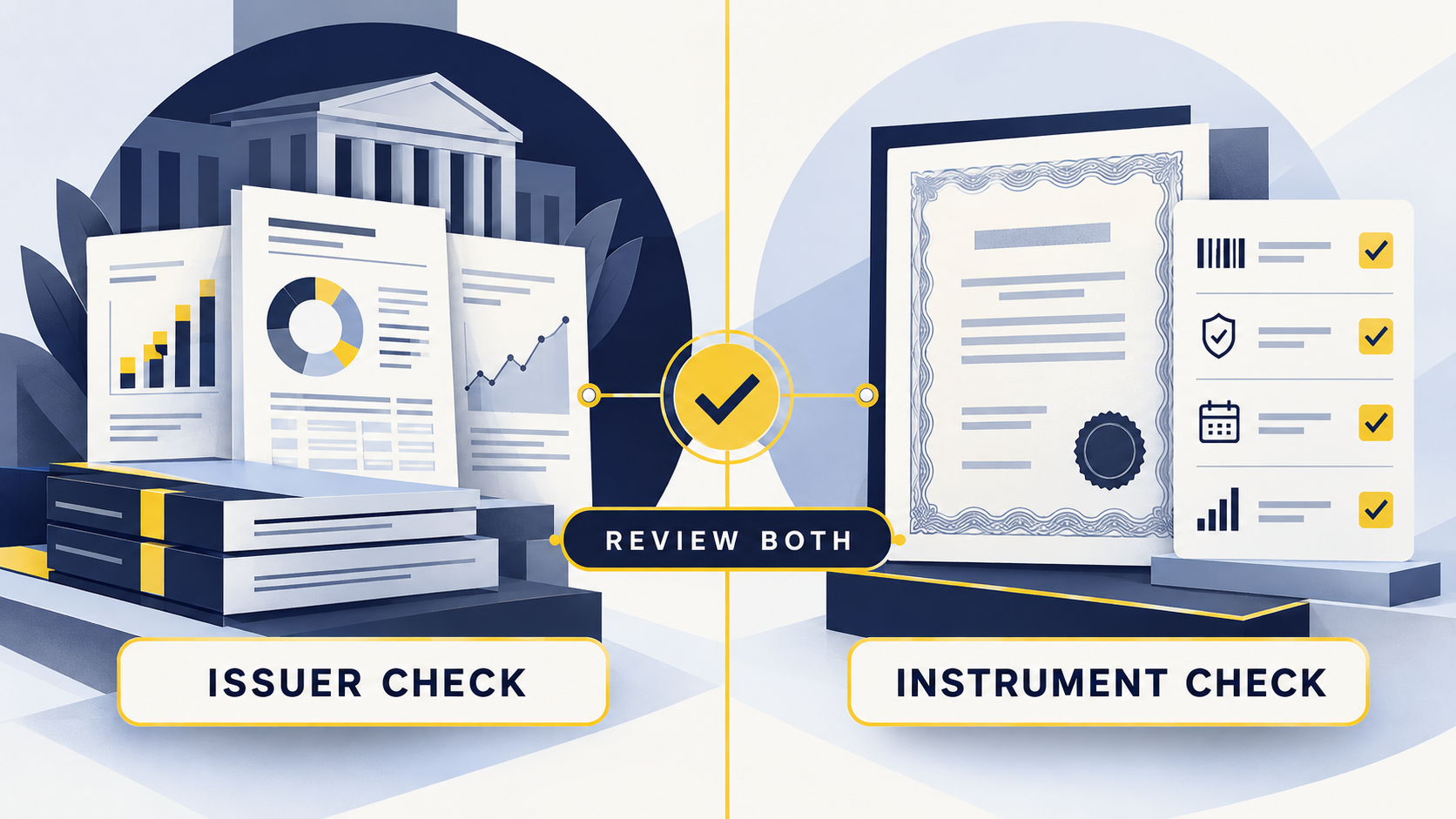
An HFC bond requires an assessment of both the issuer’s lending business and the specific bond structure.
A Housing Finance Company bond may display the same familiar fields as another corporate bond: coupon, maturity, credit rating, price and indicative YTM. The issuer’s business model, however, requires a more specific review.
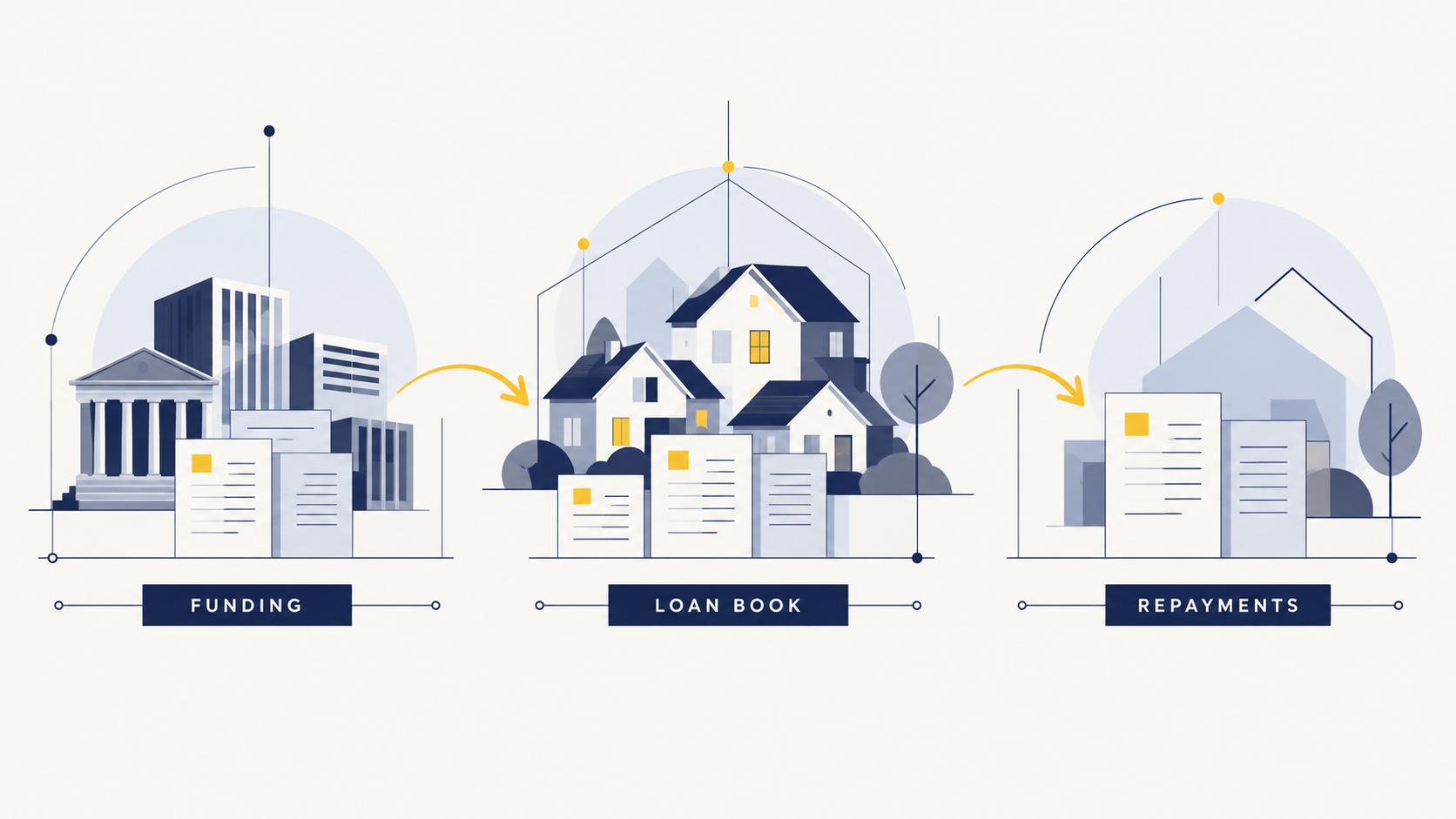
An HFC borrows money and lends primarily into housing-related segments under the applicable regulatory framework. Its ability to service bond payments depends on the quality of its loan assets, capital position, funding access and management of timing differences between assets and liabilities.
Understand the HFC’s Business Model
Not every HFC serves the same customers. Some focus on salaried home-loan borrowers. Others serve self-employed borrowers, affordable-housing customers, loan-against-property segments or wholesale and developer finance.
Review:
- Retail versus wholesale exposure
- Average loan size and borrower profile
- Geographic concentration
- Product concentration
- Fixed versus floating-rate loans
- Growth rate and underwriting approach
The mix affects asset quality, profitability and refinancing needs.
Review Asset Quality, Not Only Growth
Loan growth is useful only when repayments remain healthy. Examine gross and net non-performing assets or relevant stage-based asset-quality metrics, credit costs, provisions, write-offs and collection efficiency.
One number should not be read in isolation. A low headline NPA ratio can coexist with restructuring, elevated early delinquencies or concentration in a vulnerable segment. Read recent financial statements and the credit-rating rationale together.
Compare the direction of the metrics over several reporting periods. A single quarter can be affected by seasonality, one-off recoveries or portfolio sales. The more useful question is whether asset quality, provisions and collection performance are strengthening or weakening as the loan book grows.
Check Capital and Loss-Absorption Capacity
Capital provides a cushion against losses. Review the issuer’s capital-adequacy position, leverage, profitability and ability to raise equity or subordinated resources when required.
Also examine interest coverage and the level of existing borrowing. An HFC may report healthy growth but still face pressure if borrowing costs rise faster than lending yields or if access to funding weakens.
Understand Asset-Liability Management
Housing loans are often long-term assets. HFCs fund them through a combination of bank borrowing, bonds, securitisation, commercial paper, deposits where permitted and other sources.
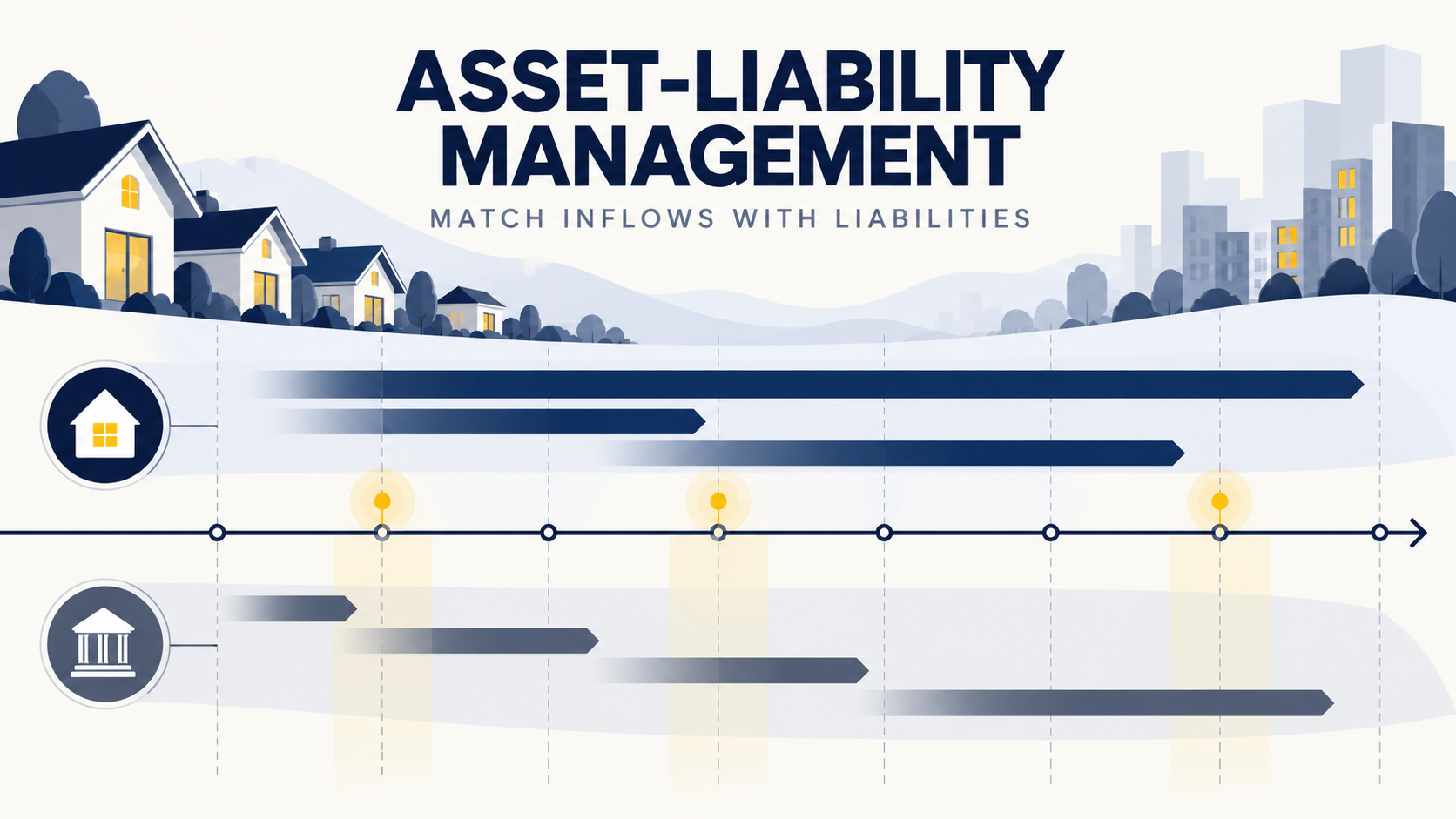
Asset-liability management, or ALM, examines whether expected inflows are sufficient to meet liabilities across time buckets. A company that depends heavily on short-term funding against long-term assets may face refinancing pressure.
Look for information on:
- Near-term debt maturities
- Liquidity buffer
- Unutilised bank lines
- Funding-source concentration
- ALM mismatches
- Securitisation and refinancing access
Funding diversity matters because concentration can turn a market disruption into a refinancing problem. Check whether the company relies heavily on one lender class or short-tenure instrument, and whether the cost of borrowing is rising.
Read the Rating Rationale for HFC-Specific Risks
The rating rationale may explain what supports the rating and what could weaken it. Pay attention to references to asset quality, capital, liquidity, promoter support, funding diversity, profitability and wholesale exposure.
Check the latest review date, outlook, watch status and rating sensitivities. The rating is an opinion, not a guarantee.
Evaluate the Bond Separately From the Issuer
Even after reviewing the HFC, examine the specific bond:
- ISIN and legal issuer
- Seniority
- Secured or unsecured status
- Nature and ranking of security
- Security cover
- Coupon and payment frequency
- Price and indicative YTM
- Maturity and amortisation
- Call or put options
- Debenture trustee
- Secondary-market liquidity
A strong issuer does not make every bond from that issuer identical. Subordinated, perpetual, callable, unsecured and senior secured instruments can carry different risks.
Where to Find the Evidence
Use the latest annual and quarterly financial statements, investor presentations, rating rationales, offer documents, term sheets and debenture-trustee disclosures. Compare the reporting dates before combining figures.
Focus on trends and definitions. “Stage 3,” “gross NPA,” “capital adequacy” and “ALM gap” can be calculated or presented under specific frameworks. Use the issuer’s notes and rating-agency explanation instead of comparing superficially different metrics.
HFC Bond Checklist
- What type of borrowers and loans dominate the book?
- Are asset-quality indicators stable or weakening?
- Is capital adequate for the risk profile?
- How concentrated are funding sources?
- Are there material ALM mismatches or near-term maturities?
- What does the latest rating rationale highlight?
- Is the bond senior, subordinated, secured or unsecured?
- What is the security cover and charge ranking?
- Can the bond be called or redeemed early?
- Is early exit realistically available?
Key Takeaway
An HFC bond should be evaluated through two lenses: the company’s loan and funding model, and the terms of the specific bond. Let the issuer’s documents explain the yield before the yield drives the decision.
Explore Listed HFC Bonds
Review issuer information, credit rating, maturity, yield, security status and applicable risk disclosures before investing.
Explore Listed HFC BondsRisk Disclosure: HFC bonds are subject to issuer credit, interest-rate, liquidity, market and structural risks. Security does not guarantee recovery, and credit ratings may change. This article is general education and is not investment advice or a recommendation to buy or sell any security.