Planning Your Festive-Season Fixed-Income Allocation Before Diwali



Separate celebration money, emergency reserves and genuine investable surplus before comparing products.
A festive bonus, business surplus or annual incentive can create a strong urge to act quickly. Some of the money may already be meant for travel, gifts, insurance premiums, school fees or year-end expenses. Another portion may need to remain available for emergencies. Only the balance that is genuinely surplus should enter an investment decision.
The first question is not “Which product offers the highest return?” It is “When might I need this money?”
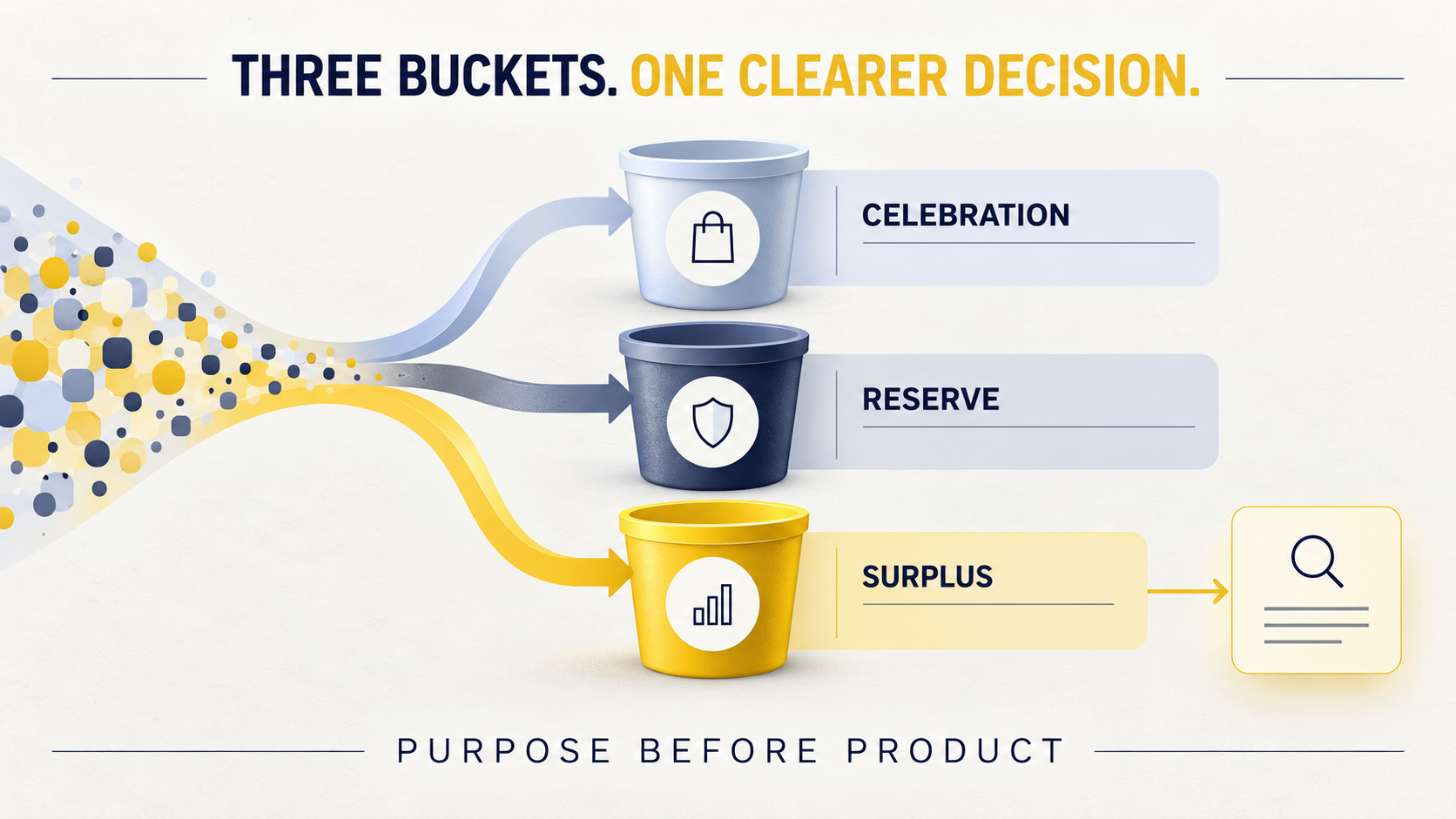
Create Three Separate Buckets
Bucket 1: Celebration and Near-Term Spending
Money required over the next few weeks should remain readily accessible. A known purchase should not be funded through an instrument whose value can fluctuate or whose exit depends on a buyer.
Bucket 2: Emergency and Operating Reserve
Emergency money is meant for events whose timing cannot be predicted. Accessibility matters more than extracting every possible additional return.
Bucket 3: Genuine Investable Surplus
Only the amount not required for planned spending or emergency needs should be evaluated for a longer holding period.
Give the Surplus a Requirement Date
The same amount can require a different product depending on whether it may be needed in three months, one year or five years.
Write down:
- Earliest possible requirement date
- Most likely requirement date
- Whether partial access may be required
- Whether the amount can remain invested until maturity
- What happens if the date changes
For a short horizon, capital risk and liquidity should lead the decision. A higher displayed return is not useful if the money cannot be accessed when required or if an early sale produces a loss.
Compare Fixed-Income Options on the Same Basis
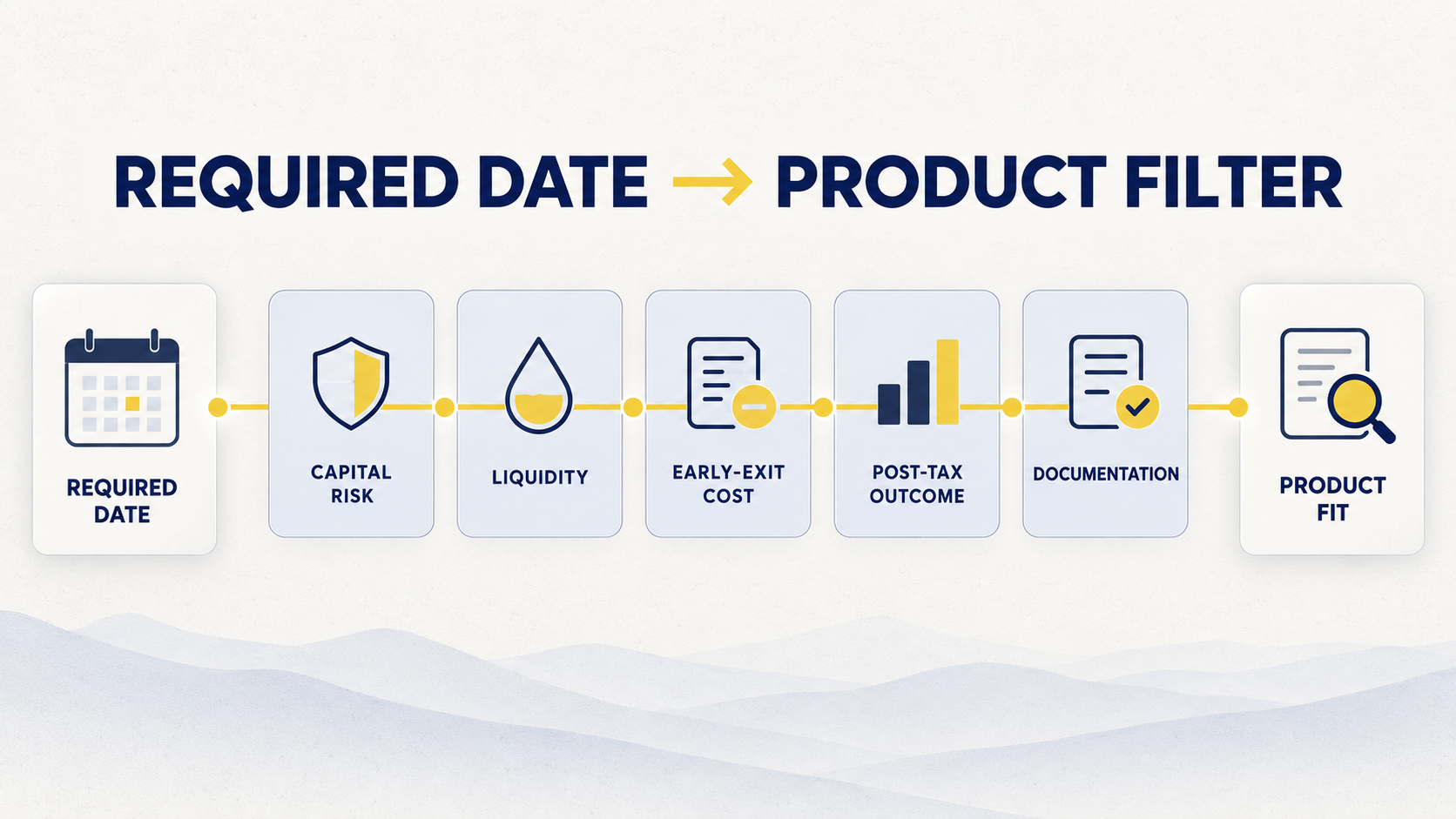
Do not compare only advertised rates. Use common filters:
- When will the money become available?
- Can the value fall before that date?
- Is repayment dependent on an issuer?
- Is early exit subject to a penalty, load or market price?
- Is a buyer required?
- What is the estimated post-tax outcome?
- What documents and risk disclosures are available?
What Different Parking Options Solve
A savings account prioritises immediate access. A fixed deposit offers a stated tenure and rate but may apply premature-withdrawal terms. Liquid or ultra-short-duration mutual funds provide market-linked short-duration exposure with scheme-specific settlement, expense and exit-load conditions. A listed bond offers instrument-level cash-flow terms but introduces issuer credit risk and may depend on secondary-market liquidity if sold early.
The purpose is not to rank these options universally. It is to identify which trade-off matches the requirement date.
For every alternative, compare the amount available on the required date—not only the displayed annual rate. A product with a higher rate can produce a worse practical outcome if early access triggers a penalty, exit load or market-price loss.
Where Listed Bonds May Fit
A listed bond may offer defined contractual cash flows and a stated maturity date. For purpose-bound money, the relevant comparison is usually a bond whose residual maturity aligns with the goal—not a long-dated bond selected only because its YTM appears higher.
Before investing, review the issuer, ISIN, rating and rationale, coupon schedule, purchase price, indicative YTM, security, maturity, call/put terms and liquidity.
Listing creates a possible market route; it does not guarantee an immediate exit. Maturity proceeds and coupons remain subject to the issuer meeting its obligations.
Do Not Let the Season Create Artificial Urgency
Festive campaigns often use limited-time language. An investment decision should not.
Pause if the message relies on:

A Simple Allocation Process
- List all planned festive and year-end expenses.
- Protect the emergency reserve.
- Identify the true surplus.
- Assign a requirement date.
- Compare risk, liquidity and post-tax outcome.
- Read product documents.
- Invest only the amount that can remain committed for the intended period.
Review the Plan After the Festival
The allocation should not disappear from attention once the transaction is complete. Record the maturity date, coupon dates, tax documents and the reason the investment was selected. If the money is linked to a future obligation, schedule a review before the requirement date rather than waiting for a reminder from the platform.
For a listed bond, continue monitoring issuer disclosures and rating actions. For other fixed-income products, review the relevant statement, renewal date or scheme information. The product may be fixed income; the surrounding plan still needs maintenance.
Key Takeaway
Festive surplus is not a separate asset class. It is money with competing purposes. Separate the purposes first, protect near-term needs and evaluate returns only on the genuinely investable balance.
Explore Short-Term Listed Bonds
Compare listed bonds using issuer information, rating, yield, maturity, coupon schedule, security status and liquidity considerations.
Explore Short-Term Listed BondsRisk Disclosure
Listed debt securities carry credit, interest-rate, liquidity and market risks. Listing does not guarantee liquidity, and repayment depends on the issuer meeting its obligations. This article is general education and does not constitute investment, tax or legal advice.